
The best music for sleep is instrumental, with a slow tempo of 60–80 BPM that helps your heart rate and breathing naturally slow down through a process called entrainment. Sleep researchers frequently recommend pieces like Chopin’s Nocturnes, Debussy’s Clair de Lune, Satie’s Gymnopédies, and Bach’s Goldberg Variations, which was originally composed to help a count with insomnia.
Why Is Music Your Best Sleep Companion?
Approximately 30 to 40 percent of adults experience insomnia at some point each year, and about 8.4 percent of adults take sleep medications most nights, according to data from UC Davis Health.
As sleep scientist and author of Why We Sleep, Dr. Matthew Walker, PhD, Professor of Neuroscience and Psychology at UC Berkeley, famously stated, “Sleep is the single most effective thing we can do to reset our brain and body health each day.” Music is not just for entertainment; it is a powerful, science-backed tool for improving your sleep.
What Does Science Say About Music and Sleep?
A landmark 2022 Cochrane meta-analysis, which reviewed 13 randomized controlled trials with over 1,000 participants, found that listening to music consistently improved sleep quality, scoring nearly three points better on the Pittsburgh Sleep Quality Index (PSQI), a standard measure of sleep health.
According to Dr. Michael Breus, PhD, a board-certified sleep specialist known as “The Sleep Doctor,” “Music can be a powerful tool for sleep because it engages the parasympathetic nervous system, helping your body transition from a state of alertness to one of rest.”
How Does Music Affect Your Brain and Body?
Your heart rate and breathing slow down in response to the tempo of the music. Perhaps most importantly, calming music has been shown to reduce cortisol levels. Cortisol, the body’s primary stress hormone, is a major enemy of sleep.
What Is the Entrainment Effect?
The most powerful mechanism behind sleep music is a phenomenon called auditory-motor entrainment. When you walk with a friend, you naturally fall into step with their pace. Similarly, your brainwaves and heart rate can synchronize with the tempo of the music you are listening to.
A groundbreaking 2025 review in Frontiers in Sleep identified that slow-tempo music between 60 and 80 beats per minute (BPM) is the sweet spot for sleep.
What Are the Best Types of Music for Sleep?
While personal preference plays a role, scientific research consistently points to certain genres and musical styles as being particularly effective for promoting sleep: typically instrumental, with a slow tempo, a predictable rhythm, and a smooth, flowing melody.
Classical Music for Sleep
Classical music is one of the most studied genres for sleep. Specific pieces frequently recommended by sleep researchers include Chopin’s Nocturnes, Debussy’s Clair de Lune, Satie’s Gymnopédies, and Bach’s Goldberg Variations. BetterSleep offers a deep dive into whether classical music is good for sleeping.
Ambient and Relaxing Sleep Music
Ambient music is designed to create an atmosphere without demanding your full attention. It often lacks a distinct melody or driving rhythm, focusing instead on texture, tone, and soundscapes. This category also includes genres like spa music for sleep.
Piano and Instrumental Music for Sleep
Music without lyrics is crucial for sleep. When you listen to songs with words, your brain’s language centers are activated as you subconsciously process the lyrics. Instrumental music, particularly solo piano music, provides the melodic and harmonic benefits of music without engaging the analytical parts of your brain.
Meditation Music for Sleep
Meditation music often incorporates elements from ambient and classical music but may also include drones, sustained tones, singing bowls, Solfeggio frequencies, and gentle, repetitive patterns.
Binaural Beats for Sleep
Binaural beats are a form of sound wave therapy: you listen to two slightly different frequencies, one in each ear, through headphones, and your brain perceives the difference as a third, single tone. For sleep, the goal is to encourage delta (0.5-4 Hz) and theta (4-8 Hz) brainwaves. To be effective, binaural beats must be listened to with headphones, as each ear needs to receive a different frequency. For a deeper understanding, BetterSleep has a comprehensive guide on binaural beats for sleep.
Deep Sleep Music and Delta Waves
Some music is specifically composed to encourage the production of delta waves, the brainwaves dominant during the deepest, most restorative stages of sleep. This deep sleep music often uses very slow tempos (below 60 BPM) and sustained low-frequency tones.
Lo-Fi and Chill-Out Music for Sleep
Lo-fi and chill-out music is characterized by slower tempos (typically 70-90 BPM), simple hip-hop-inspired beats, and often incorporates elements of jazz, soul, and vinyl crackle.
What Makes Sleep Music Effective?
The most comprehensive slow-tempo music research from 2025 highlights three critical factors: tempo, lyrical content, and volume.
What Is the Ideal Tempo and Rhythm?
The ideal tempo for sleep music is between 60 and 80 beats per minute (BPM), closely mirroring a relaxed resting heart rate. Most pop songs are between 100 and 130 BPM, which is why they feel energizing rather than relaxing.
Why Do Lyrics Hurt Your Sleep?
Music with lyrics, especially in a language you understand, engages the language-processing centers of your brain. Instrumental music is almost always the superior choice for a sleep playlist.
How Do Volume and Duration Affect Sleep?
The volume should be just loud enough to be heard comfortably, but not so loud that it becomes a distraction. As for duration, most studies suggest listening for 30 to 45 minutes as you are winding down.
How Can You Build the Perfect Sleep Playlist?
As Jesse Koskey, MD, a psychiatrist in the UC Davis Department of Psychiatry and Behavioral Sciences, notes, “A lot of studies include relaxing classical or ambient songs. But one study showed that the music participants picked out themselves, including video game and pop music, helped just as much as an album called ‘The Most Relaxing Classical Music.’”
Start with Familiar Favorites. Begin with instrumental pieces you already know and love.
Focus on the 60-80 BPM Range. Use a tool like a BPM counter app or website to check the tempo of potential tracks.
Choose Simple, Repetitive Melodies. Avoid tracks with dramatic shifts in volume, sudden instrumental entries, or unexpected tempo changes.
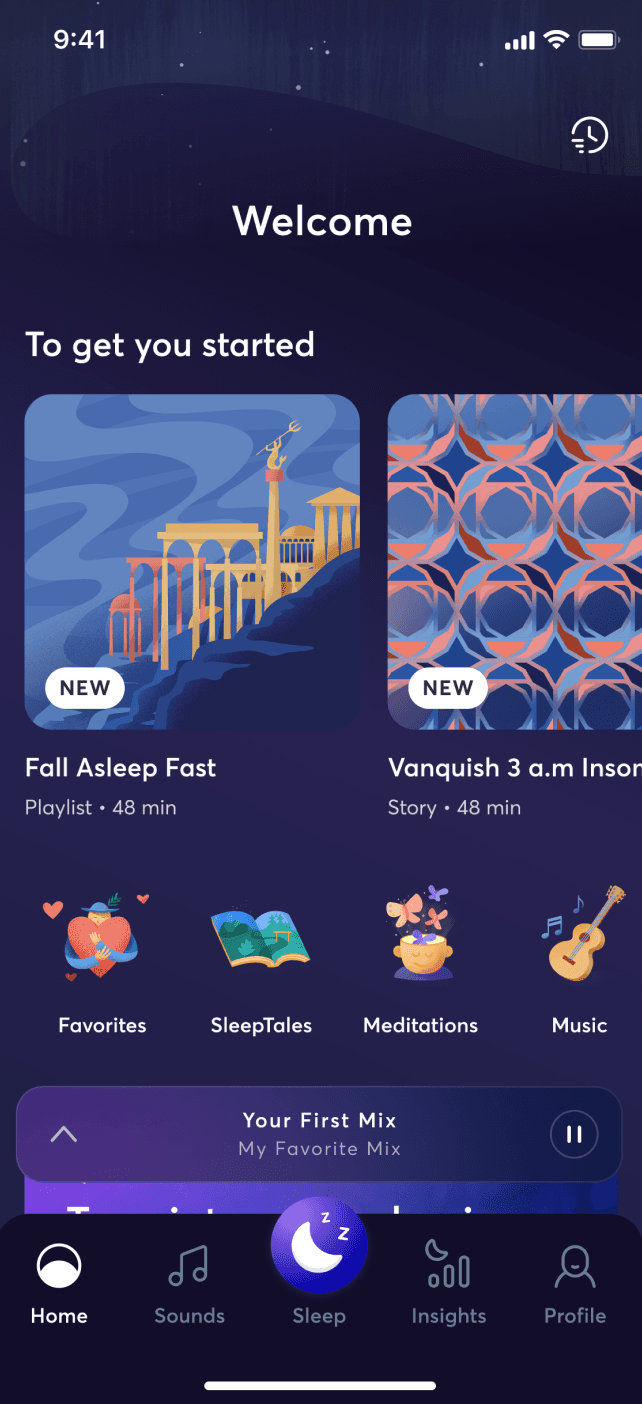
Layer Sounds with a Mixer. Use a tool like the BetterSleep app’s sound mixer to layer a gentle piano melody over the sound of soft rain, or combine an ambient drone with the sound of a crackling fireplace.
Set a Duration of 45-60 Minutes. This gives your body and mind ample time to wind down.
Is Music for Sleep Better Than Medication?

In a review of research published in The Carlat Report, Jesse Koskey, MD, found that music’s effect on improving sleep quality was comparable to that of common prescription sleep medications like Z-drugs (such as zolpidem) and benzodiazepines. For chronic or severe insomnia, it is always best to consult with a healthcare provider.
What Are the Most Common Mistakes When Using Music for Sleep?
Choosing Music with Lyrics. Lyrics activate your brain’s language centers, which is counterproductive to falling asleep.
Playing Music Too Loudly. Loud music can be stimulating and may even damage your hearing over time.
Using a Playlist with Ads. Interruptions from ads can completely negate the benefits of the music.
Watching Music Videos or Using a Bright Screen. The blue light emitted from your phone or TV screen suppresses the production of melatonin.
Not Using a Sleep Timer. Letting music play all night can disrupt your sleep during the lighter stages in the second half of the night.
Who Should Consider Special Approaches to Sleep Music?
Music is particularly effective for improving sleep in older adults, who often experience age-related changes in sleep architecture. For hospitalized patients, a 2023 systematic review and meta-analysis found that music benefited them by significantly improving sleep quality compared to standard care.
Frequently Asked Questions About Music for Sleep
What type of music is best for sleep?
Instrumental music with a slow tempo of 60-80 BPM is best for sleep. Genres like classical, ambient, meditation, and piano music are scientifically shown to be effective.
Is it OK to listen to music while sleeping all night?
It is generally safe to listen to music while sleeping all night, though some people may prefer to set a sleep timer to turn the music off after 30-60 minutes.
What BPM is best for sleep music?
The ideal BPM for sleep music is between 60 and 80 beats per minute.
Do binaural beats actually help you sleep?
Yes, multiple studies from 2024 confirm they can be very effective. Remember to use headphones for them to work.
Can music replace sleeping pills?
For mild to moderate insomnia, research suggests music can be as effective as some prescription medications without the side effects.
Should I use headphones or speakers for sleep music?
Both can be effective for most types of sleep music. Headphones are necessary for binaural beats (each ear needs a different frequency).
What Is Your Path to Better Sleep Through Music?
Music is a safe, effective, and accessible tool for improving sleep quality. As Jesse Koskey, MD, puts it, “The gist is that there’s no wrong way to try music as a sleep aid. And it’s likely to help with mild sleep problems.”
This article is for informational purposes only and does not constitute medical advice.